Parallels Best Option For Windows On Mac
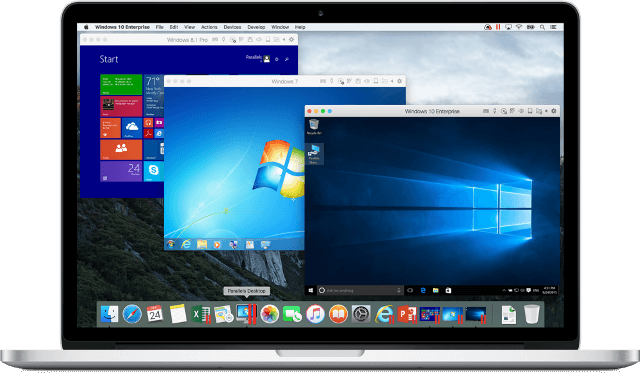
The best free option for Microsoft and Apple computers. Parallels is a solid choice for macOS. We’re concentrating on the Windows version but the Mac edition works in a very similar way. Bootcamp will be a much much better option for gaming than Parallels, for the simple fact that you won't be running two OSes at once. Bootcamp is also very easy to set up via the built in utility on your Mac. Much to my surprise, running Windows 10 on Mac using Parallels Desktop 13 is a lot easier, and you will really like using it! For those unfamiliar, a virtual machine is basically a virtual simulation of a real machine, which allows you to run a full-fledged operating system on your computer without needing to partition the hard drive. Optimizing Parallels Desktop for Mac for the best performance of a guest OS may seem to be largely a matter of customizing the performance of the guest OS itself, such as turning off visual effects in various Windows OSes. Best Choice: Parallels Desktop for Mac Parallels Desktop 13 for Mac is a fast and responsive virtualization application for macOS. It is designed for the average user, is priced competitively, comes with great support, and makes installing Windows a breeze.
As Mac users, it’s easy to turn our noses up at running Windows, but the truth is that it sometimes can’t be avoided. Be it for work or for playing video games, running Microsoft’s operating system on Apple hardware isn’t nearly as hard as it seems like it would be.
The best way to run Windows on your Mac When it comes to running Windows on a Mac, there are two main players: Parallels Desktop 7. Parallels Desktop 7 makes Windows-on-Mac fast, stable.
There are two main ways to go about this: virtualization and Boot Camp. The former involves running a macOS application that allows you to run Windows within, while the latter equips you to reboot your Mac fully into Windows.
There are several factors involved in picking the correct path, including price, ease of use, and flexibility. It’s also important to consider what sorts of tasks you need to achieve with your Windows installation, as that may make the right decision more clear.
If you need access to a couple of Windows apps while you’re running macOS, it’s best to virtualize. Running Windows in a virtual machine (dubbed a “VM”) also allows you to store it all on something like an external SSD, as Boot Camp requires a chunk of your boot drive.
Download parallels 11 for mac. For that trade, Boot Camp offers direct, native access to your Mac’s hardware. If you want to game in Windows on your Mac, it’s the way to go.
Virtualization Apps
There are three virtualization apps worth considering.
Parallels Desktop and VMware Fusion are very similar options. Neither are free, but they come with great customer support if you need help:
- Parallels runs anywhere from $79.99/yr to $99.99/yr, depending on your needs. That subscription means your software is always up to date, ready for new versions of both macOS and Windows.
- Fusion follows a more traditional model. The current version is $79.99 for a new license, while an upgrade license will set you back just $49.99.
The third option is VirtualBox, an open-source (and free) option. While there is a vibrant online community around this application, if you are virtualizing Windows for work, I think it’s more than worth the price of admission to pick up Parallels or Fusion.
Parallels Desktop for Mac is a hardware virtualization solution for Mac computers with Intel processors. Developed by Parallels Inc., a privately held software company with offices in 15 countries, Parallels Desktop for Mac (referred to simply as Parallels from here on) allows Mac users to seamlessly switch between macOS and the Windows operating system. Parallels Toolbox for Mac and Windows. 30+ tools in a lightweight, powerful, all-in-one application for Mac ® and PC. Easy to use and economical—a whole suite of tools for a fraction of the cost of individual apps, packaged in one simple interface. Use Windows side by side with macOS ® (no restarting required) on your MacBook ®, MacBook Pro ®, iMac ®, iMac Pro ®, Mac mini ®, or Mac Pro ®.Share files and folders, copy and paste images and text and drag and drop files between Mac and Windows applications. Parallels Desktop for Mac is the first solution that gives Apple users the ability to run Windows, Linux or any other operating system and their critical applications at the same time as Mac OS X. Pc parallels for mac review.
Parallels
Parallels Desktop is the best way to run Windows on your Mac. It offers lots of flexibility when it comes to which operating systems it can run and it offers a customizable experience to make it your own.
Set-up & Settings
Installing Windows 10 from an .iso downloaded directly from Microsoft’s store took just a few minutes. While most people will probably be installing Windows, Parallels can host all sorts of operating systems:
You can install Windows from an ISO, as I did, or even download a trial of Windows from Microsoft within the application. Additionally, Parallels can download a bunch of Linux distros and even download Modern.IE virtual machines, which are helpful when you need to test websites in old versions of Internet Explorer.
Parallels can transfer information from an existing PC, including that computer’s operating system. You can boot your Boot Camp partition as if it were a VM.
For my purposes, I installed the 64-bit version of Windows 10. After installation, I was prompted to create a Parallels account. This ties the app to Parallels’ website, keeping your license keys and subscriptions updated. After logging in, I was greeted with my Windows 10 VM:
There are a whole bunch of settings that can be tweaked. Things like how much RAM is allocated to the VM and what sort of network access it has can be adjusted. You can grant access to hardware like your Mac’s SD card slot, USB ports, and more as needed.
Parallels comes with a bunch of creature comforts too, though.
It can automatically share the contents of your Mac with the VM and vice versa. This means if you create a text file and save it to your Desktop, it will appear on the desktop of your macOS virtual machine:
It can open Mail.app on your Mac if you click an email link within the VM itself, and even automatically pause the VM when you aren’t using it, giving macOS more resources when possible. Parallels can even sync your clipboard across your Mac and its VMs and add your printer to your VM’s operating system automatically.
For those of us with macOS shortcuts engrained into our hands and brains, Parallels can pass those to your VM so you don’t have to hit Ctrl + C to copy when you are used to Cmd + C.
If you want your VM to be completely isolated from its host Mac, you can enable that, too.
Coherence Mode
The integration between host is even visual with Parallels. Running Windows apps can appear in your macOS dock, for example:
By default, Parallels VMs are in their own windows, but in Coherence mode, the lines are blurred. Here’s Finder and File Explorer, side by side, for example:
There’s no Windows background anymore. My Windows apps still look like Windows, but they operate like macOS apps. They appear in the Dock and even the Cmd + Tab switcher. Task bar items are even added to the Mac’s menu bar:
The clever features don’t end there. The Windows start menu can be opened via the VM’s Dock icon or the Parallels menu bar item when in Coherence mode.
In this mode, Parallels truly blends the VM into the macOS experience. If you need access to a single Windows app and don’t want the visual clutter of actually seeing Windows, this mode is for you.
Personally, I like to think about VMs as being contained islands. I don’t mind some limited sharing, but I want there to be a clear separation.
Performance & Utility
It’s hard to measure the speed of virtual machines. Your mileage will vary based on what computer you have, how much RAM it is equipped with, and more.
In measurable aspects, like VM boot time, Parallels was faster than VMware Fusion across the board on my iMac Pro.
Best Option For Windows Movie Maker
Parallels comes with a bunch of virtual machine management tools. You can create snapshots of your VM to restore to at a later time if a software update goes poorly.
The application comes with Parallels Toolbox, a collection of utilities. I’m not sold on the value of these tools, but they come with a subscription to Parallels.
VMware Fusion
Fusion is the big competitor to Parallels, and while it does not require an annual subscription, it lacks some of the polish of its rival. That said, comparing the two applications side by side, there is very little difference in terms of features.
For some users, it may come down to price. Some users simply don’t want an annual subscription. I understand that, but I have more faith in Parallels’ future. VMware is a huge company, owned by Dell. Fusion is just one product in their catalogue, and a few years ago, it was rumored that Fusion may not be long for this world. VMware denied the report, but I can’t shake the feeling that Parallels is a better long-term bet.
Fusion includes a feature named Unity, which is very much like Parallels’ Coherence mode. The Windows backdrop goes away, and Windows apps show up directly in the macOS interface, including the Dock and App Switcher. However, not all of the resources used are Retina quality, leading to blurry icons in places. Worse, the entire system feels slower than Parallels. Even on an iMac Pro, Unity mode will stutter and have to redraw windows instead of smoothly animating them.
Boot Camp
As virtualization — running Windows inside a macOS app — lets you use both macOS and Windows at the same time, it’s probably the best option for most people. The convenience of having your one or two must-have Windows apps right next to the data and apps on your Mac is hard to beat.
However, virtualization comes with a price: computational overhead. You’ll be sharing your Mac’s CPU, GPU, and RAM across what is effectively two computers. Most modern Macs have more than enough horsepower for this, but if you want to run Windows on your Mac for gaming, Boot Camp is your best bet.
Boot Camp is built into macOS, and supports Windows 10, Windows 8.1 and Windows 7, depending on the age of the host Mac. If you’re running a Mac built in 2012 or later, you should be set for Windows 10.
Be sure to visit Apple’s support pages to verify which version of Windows your machine will support via Boot Camp before you run out and buy something. There’s a lot of fine print here.
Installing Windows via Boot Camp is pretty straight forward. There’s an app in your Mac’s Utilities folder named Boot Camp Assistant. You’ll need it, as well as a disk image file (.iso) of the Windows installer. If you purchase Windows online from Microsoft, you can download an ISO directly from the company’s store.
Boot Camp Assistant will walk you through selecting how much disk space you want to allocate to Windows. This will become a new partition on your Mac’s SSD; the space will be removed from the free space you can access in macOS.
Once the partition is created, you may be prompted to insert a USB drive for Boot Camp Assistant to download the necessary Windows drivers and the OS will install.
Once everything is complete, you can select which OS you’d like to boot into via the Startup Disk preference pane in macOS or the Boot Camp system tray item in Windows.
Boot Camp gives Windows direct access to your Mac’s hardware, meaning it’s a great option for things like gaming or heavy rendering, but for most users who may need access to one or two Windows-only apps, it’s simply too much trouble to reboot between operating systems.
In Closing
To wrap this up, Boot Camp is great if you need the full hardware capabilities of your Mac to be funneled into your virtual machine. If not, Parallels is an excellent choice. It’s fast, easy to use, and comes with a lot of features that make living in two operating systems easier than ever.
Macs have a thriving ecosystem of software, but some programs still only support Windows. Whether you want to use business software or play Windows PC games, there are many ways to run Windows programs on your Mac.
Some of these methods are similar to the ways you can install Windows software on Linux or run Windows programs on a Chromebook. Virtual machines, dual-booting, the Wine compatibility layer, and remote desktop solutions are all included here.
Virtual Machines
We recommend using a virtual machine program, ideally Parallels or VMWare Fusion, to run Windows applications on a Mac without rebooting. For maximum performance, which is particularly necessary for gaming, we recommend dual-booting Windows with Boot Camp instead.
A virtual machine is one of the best ways to run Windows desktop software. They allow you to install Windows and other operating systems in a window on your Mac desktop. Windows will think it’s running on a real computer, but it’s actually running inside a piece of software on your Mac.
You don’t have to use your Windows program in the virtual machine window, either—many virtual machine programs allow you to break Windows programs out of your virtual machine window so they can appear on your Mac desktop. However, they’re still running inside the virtual machine in the background.
You’ll need a Windows license to install Windows in a virtual machine. If you already have a product key, you can download Windows installation media for free and install it in a virtual machine program.
RELATED:How to Seamlessly Run Windows Programs on Your Mac with Parallels
Popular virtual machine programs for Mac include Parallels and VMware Fusion. Each of these is a paid program, so you’ll have to buy both a Windows license and a copy of your virtual machine program of choice. You can also use the completely free and open-source VirtualBox for Mac, but its 3D graphics support and Mac operating system integration aren’t as good. Parallels and VMWare Fusion both offer free trials, so you can try all these programs and decide which is best for you.
Running Parallels On Mac
Note:We don’t often recommend paid software, but in the case of Parallels Desktop, it’s something we use at How-To Geek every single day for testing software and running Windows. The integration with macOS is amazingly well done, and the speed blows away VirtualBox. In the long run, the price is well worth it.
There’s one big downside to virtual machines: 3D graphics performance isn’t amazing, so this isn’t the best way to run Windows games on your Mac. Yes, it can work—especially with older games—but you won’t get the best performance, even in an ideal situation. Many games, especially newer ones, will be unplayable. That’s where the next option comes into play.
Boot Camp
RELATED:How to Install Windows on a Mac With Boot Camp
Apple’s Boot Camp allows you to install Windows alongside macOS on your Mac. Only one operating system can be running at a time, so you’ll have to restart your Mac to switch between macOS and Windows. If you’ve ever dual-booted Linux on your Windows PC, it’s just like that.
Installing Windows as a real operating system on your Mac is the best idea if you want to play Windows games or use demanding applications that need all the performance they can get. When you install Windows on your Mac, you’ll be able to use Windows and Windows applications with the maximum possible performance. Your Mac will perform as well as a Windows PC with the same specifications.
The downside here is that you can’t run macOS applications and Windows applications side-by-side at the same time. If you just want to run a Windows desktop application alongside your Mac applications, a virtual machine will probably be ideal. On the other hand, if you want to play the latest Windows games on your Mac, Boot Camp will be ideal.
As with virtual machines, you’ll need a Windows license to install Windows on your Mac.
Wine
RELATED:How to Run Windows Programs on a Mac With Wine
Wine originated on Linux. It’s a compatibility layer that allows Windows applications to run on other operating systems. Essentially, Wine is an attempt to rewrite the Windows code that applications depend on so they can run on other operating systems. This means that Wine is nowhere near perfect. It won’t run every Windows application, and will have bugs with many of them. The Wine AppDB can give you some idea of which applications are supported, although it focuses on Linux support.
Nevertheless, Wine is one way to try running Windows applications on a Mac. Because it doesn’t require you actually use Windows, you don’t need a Windows license to use Wine. It’s completely free. Just download Wine or WineBottler for macOS and see how well it works for your application.
CrossOver Mac
CodeWeavers’ CrossOver Mac is a paid application that will run Windows programs on Mac. It uses the open-source Wine code to accomplish this, but CrossOver provides a nice graphical interface and focuses on officially supporting popular programs. If an officially supported program doesn’t work, you can contact CodeWeavers and expect them to make it work for you. CodeWeavers contributes their improvements back to the open-source Wine project, so paying for CrossOver Mac also helps the Wine project itself.
CrossOver offers a free trial it you want to try it out first. You can also view a list of which programs run well on CrossOver before buying. While CrossOver focuses on compatibility, it’s still based on Wine, and won’t work with everything.
Most people will probably be happiest going for a virtual machine program and a Windows license. With CrossOver, you don’t need to run a Windows virtual machine—but, if you do run a Windows virtual machine, you’ll be able to run almost any Windows program with less risk of bugs. CrossOver does theoretically allow you to run Windows PC games on a Mac with better performance than you’d get in a virtual machine, but you’ll risk running into bugs and unsupported programs. Boot Camp may still be a better solution for that.
Remote Desktop
RELATED:How to Access Windows Remote Desktop Over the Internet
If you already have a Windows system, you could skip running Windows software on your Mac completely and use remote desktop software to access the Windows machine from your Mac’s desktop. Organizations with business software that runs on Windows can host Windows servers and make their applications available to Macs, Chromebooks, Linux PCs, iPads, Android tablet, and other devices. If you’re just a home user who also has a Windows PC, you could configure that Windows PC for remote access and connect to it whenever you need a Windows application. Bear in mind that this isn’t ideal for visually intensive applications like PC games.
If you’re a Chrome user, you can even use Chrome Remote Desktop to connect to a Windows PC running Chrome from your Mac running Chrome.
All these tricks obviously require more work than simply installing a Windows program on a Windows PC. If you have a Mac, you should focus on using Mac software when possible. Windows programs won’t be as integrated or work as well.
You may have to buy a Windows license for your Mac to get the best compatibility, whether you’re using a virtual machine or installing Windows in Boot Camp. Wine and CrossOver are nice ideas, but they aren’t perfect.
Image Credit: Roman Soto on Flickr
READ NEXT- › Free Download: Microsoft’s PowerToys for Windows 10
- › How to Overclock Your Computer’s RAM
- › What’s New in Chrome 77, Arriving September 10
- › How to Use Pipes on Linux
- › Why Does USB Have to Be So Complicated?