Parallels Desktop 13 For Mac Review
Platform: MacEdition: Parallels Desktop 13 for Mac Verified Purchase I have started using Parallels Desktop a couple of month ago after several friends recommended for data analytics project. After trying Office for Mac and Office 365 I started using Excel in a Windows 10 VM so I could compile charts and analyze clinical data. Virtualization Parallels Desktop 13 review: Now your MacBook Pro Touch Bar works with Windows, too. Posted by J.R. On October 09 2017. The latest edition of Parallels Desktop is not only ready for macOS High Sierra, but already supports the forthcoming Windows 10 Fall Creators Update as well. Parallels Desktop 14 makes it a snap to run macOS, Windows, or Linux virtual machines on your Mac. It has improved launch times, graphics improvements, and automatic monitoring of storage, CPU. Parallels Desktop 13 makes it easy to run macOS, Windows, or Linux virtual machines on your Mac, adding improved performance, picture-in-picture, and enabling support for cross-platform features. Platform: MacEdition: Parallels Desktop 13 for Mac Verified Purchase I have started using Parallels Desktop a couple of month ago after several friends recommended for data analytics project. After trying Office for Mac and Office 365 I started using Excel in a Windows 10 VM so I could compile charts and analyze clinical data.
As enjoyable as MacOS is, a day will come when you might need to open up a Windows exclusive application. When that day comes, you’ll be faced with a decision. Do you partition your drive, fire up Boot Camp, and install a full-fledged version of Windows? Or do you just buy Parallels 13?
There are other solutions, but these two rise to the top of any Windows-on-Mac discussion. During our Parallels 13 review, we saw firsthand why that is — and why Parallels might be the best option for most people.
Best Buy has honest and unbiased customer reviews for Parallels Desktop® 13 for Mac - Mac. Read helpful reviews from our customers. Best Buy has honest and unbiased customer reviews for Parallels Desktop® 13 for Mac - Mac. Read helpful reviews from our customers.
Living in parallel
The divide between Windows and MacOS isn’t as stark as it used to be. Outside of gaming, you can find an analogous version of most Windows software nestled in the warm embrace of the MacOS App Store, or elsewhere online. All the major productivity suites are on MacOS and Windows — Microsoft Office, Adobe Creative Cloud, and of course Google’s G Suite.
There’s still cases where you’ll need a regular install of Windows, though. A number of specialized software tools only support one platform or another, and software developers often need access to a Windows environment for testing. That’s where Parallels comes in.
Installation is quick and painless, and it doesn’t require any messing around with hard drive partitions or boot loaders. You install it like any other MacOS application — after you pay the entry fee of $80, or $100 per year, for the Pro version. Click through a few menus, and that’s it. The rest of the installation goes on auto-pilot, downloads Windows 10, and breezes right through all the setup.
Parallels is great at doing heavy lifting in the background, out of sight.
Installing a Twitter client requires more interaction than installing Parallels 13, and that’s a good thing. Parallels is great at doing heavy lifting in the background, out of sight.

Contrast the installation process to Boot Camp, and it’s easy to see why Parallels 13 is the more attractive — if expensive — option for some. To install Boot Camp, you’ll need partition your hard drive, reboot your Mac a few times, and then deal with installing Mac-specific drivers on your Windows install. Even then, the trackpad never feels quite right.
Windows when you want it, MacOS when you don’t
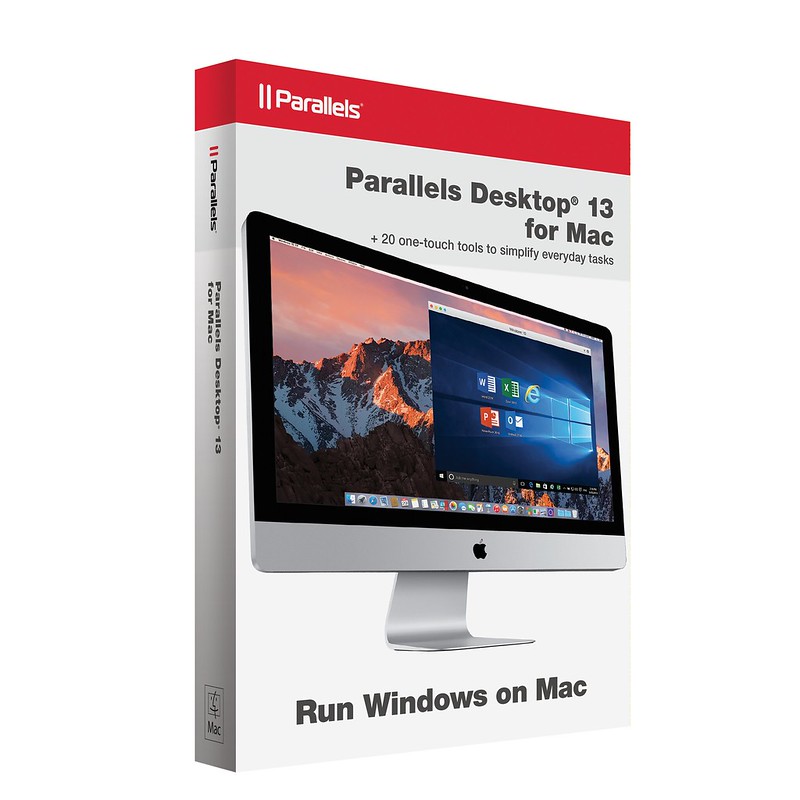
Once it’s installed, Parallels 13 offers the full functionality of Windows 10 in parallel with MacOS. You can fire up Parallels from your applications menu, or you can just click your new Windows folder from the dock, and jump right into any Windows app, as if it were just a part of your MacOS experience.
The seamless transition between Windows and MacOS has long been the draw of Parallels, and the latest version upholds that storied tradition. Windows 10 is never more than a click away, and your Windows apps even live in your dock, just like your MacOS apps.
On top of that, Parallels 13 goes one step further. With the “Coherence” mode, Parallels actually does a decent job of merging with MacOS proper. The Windows 10 panel goes away, and your Windows taskbar icons jump up on your MacOS menu bar. Your Windows apps even live inside your MacOS desktop environment, just like your regular MacOS apps.
All right, what’s the catch?
Parallels and its Coherence mode are very cool, but they require a substantial amount of system resources. We did our testing on a 2016 MacBook Pro 15 — with an Intel Core i7-6820HQ and 16GB of RAM — and Coherence mode caused significant slowdown over time. Sites had trouble loading, while Excel and Word started to cry for mercy, exhibiting substantial input delay.
If you do need it, you’ll find Parallels 13 is nearly perfect solution.
That said, slowdown was the only real issue we encountered during our testing, and Parallels does an admirable job of managing system resources when you’re not actively running Windows apps. When you tab out of a Windows app, Parallels puts it on the back burner. Your Mac won’t be quite as slow, but there’s still a bit of input lag.
Other than that, Parallels ran every Windows 10 application flawlessly during our tests. Adobe Photoshop, Premiere Pro, and even Steam ran without any issues. In fact, when we had Photoshop open in MacOS and Windows 10 with Coherence mode active, it was hard to tell which one was which.
It’s important to point out that running Windows 10 through Parallels is a bit more limited than running Windows 10 through a Boot Camp install. Parallels is a virtual machine — an emulation of a Windows machine — and Boot Camp just installs a regular version of Windows 10 on your MacBook or iMac hardware.
The Boot Camp version of Windows 10 can interface directly with your hardware, so it’s always going to be a quicker, more robust option and the best option for gaming on a Mac or MacBook. Gaming through Parallels is… ill-advised.
Advanced, graphics-heavy games like Overwatch — if you can get them to run at all — will be unplayable. That’s not what Parallels is meant for, so remember that if you were hoping Parallels might offer an easy path to gaming on your Mac.
A solution in search of a problem
Overall, Parallels 13 does an excellent job of integrating Windows 10 into MacOS. It’s seamless, fast — usually — and reliable. If you need access to a Windows 10 environment for software testing, or just one or two applications, Parallels is an excellent choice.
With that said, for most users, the price of entry will be too high for what you get. Parallels 13 is an excellent piece of software, but the utility of the software for most users is debatable. Parallels targets a set of power users that need frequent access to both operating systems.
For most people, Parallels is an answer in search of a question – but if you do need it, you’ll find Parallels 13 is nearly perfect solution.
Editors' Recommendations
If you’re a Mac user who needs quick and fast access to a Windows installation, then in many cases it’s a good idea to go with a Virtual Machine. Parallels is one of the most popular virtualization options for Mac users wishing to run Windows, and the latest version, Parallels 13, makes it ridiculously easy to get up and running.
Via what essentially amounts to an unattended installation of Windows 10, Parallels 13 can have you up and running, from download to usage, in just a few minutes. Watch our brief video walkthrough for a demonstration.
Synology RT2600ac: The AirPort Extreme replacement.
When it comes to running Windows on the Mac, there are quite a few options to explore. You can now with a tried an true Windows Boot camp installation, a Windows To Go install, or one of the many virtualization options available.
There are free virtualization options available, but if you’re looking for sheer ease of use and dead-simple installation, Parallels 13 is hard to beat. You can go from not having Windows, to having a Windows 10 installation in just a few clicks. Best of all, the majority of the install process is completely unattended, so you can just set it and forget it.
Video walkthrough
As you might expect from a major new release, Parallels 13 includes several new features that are enhancements over previous versions of the software. Most notably, it also officially supports macOS High Sierra.
One of my favorite new features is the new Picture-in-Picture mode, which allows you to keep a virtual instance on screen at all times. This is handy for being able to monitor one more more virtual machines simultaneously, while still working in macOS.
There is also extensive utilization of the MacBook Pro Touch Bar in Parallels 13. Although I no longer own a machine donning a Touch Bar, users can expect to be able to interface directly with Windows applications using the dynamic input method.
There are other new items in Parallels 13, including People Bar integration directly in the macOS Dock. This features allows users to have one-click access to frequently used contacts, and comes with more overall flexibility in the Parallels environment than it does on Windows itself.
But of all things included with this latest version of Parallels, I most appreciate the sheer ease-of-use provided by the software. Installing Windows, frankly, couldn’t be easier, and being able to run multiple virtualized software instances via Picture-in-Picture is a very nice feature to have.
Some may have rightly questioned my decision to upgrade my 5K iMac with 40 GB of RAM, but such a choice pays off when running more than one virtual machine. In that case, the more RAM the better, since you must individually assign each instance with resources from your overall system pool. It also means that the upcoming iMac Pro’s 8, 10, and 18-core processor options will be well-suited for virtualization. Just be sure to get as much RAM as you can, since it won’t be user-replaceable.
To be sure, Parallels 13 is an investment, especially when you consider that using Boot Camp, or software like Virtual Box is free. However, you’re paying for sheer convenience in the case of Parallels. There’s no need to restart your Mac into Windows, and installation is more or less effortless. Performance won’t be as good as running Windows directly, but virtualization has made significant strides over the past few years. For example, Parallels will even be able to take advantage of external GPU resources once Apple unlocks that ability in macOS High Sierra next spring. If you value convenience, then the $80 price of admission may be worth it to you. Yo ucan buy directly from Parallels here or on Amazon here.
Parallels Desktop 13 For Mac Activation Key
We’re giving away two copies of Parallels 13 for free. Here’s how to win:
Leave a comment on our @9to5Mac Parallels 13 Instagram post telling us how you plan on using the virtualization software. The first two valid replies will receive a free activation code via Instagram DM, so make sure you follow us there.
Parallels Desktop 12 For Mac
Update: giveaway winners (@_dlmc88_ and @derexed) have been selected. Thank you to all who entered. Stay tuned for more giveaways.