Parallels For Mac Share Os X Files
Up to Date
Parallels Desktop for Mac is the first solution that gives Apple users the ability to run Windows, Linux or any other operating system and their critical applications at the same time as Mac OS X on any Intel-powered iMac, Mac Mini, MacBook or MacBook Pro. Help Me Understand Parallels File Sharing. Discussion in 'Windows, Linux & Others on the Mac' started by JoelBC, Nov 20, 2012. Most Liked Posts. JoelBC, Nov 20, 2012. JoelBC macrumors 6502a. MAC OS X files are stored in HFS+ format while Windows files are stored in NTFS format. Parallels Desktop 13.3.1 Keygen For Mac OS X is now available at izofile. The best Mac application to run windows apps on your Mac Laptop or desktop. The best Mac application to run windows apps on your Mac Laptop or desktop. In Part 1 of the Parallels Mac Management for SCCM series I installed the Parallels Configuration Manager Console Extension. I installed this on my site server ‘ConfigMgr’. Part 2 focused on the installation of the Parallels Proxy which I installed on a remote server called ‘Parallels’ which.
Optimized for the latest Windows 10 updates and ready for macOS Catalina (10.15).
Ultimate Flexibility
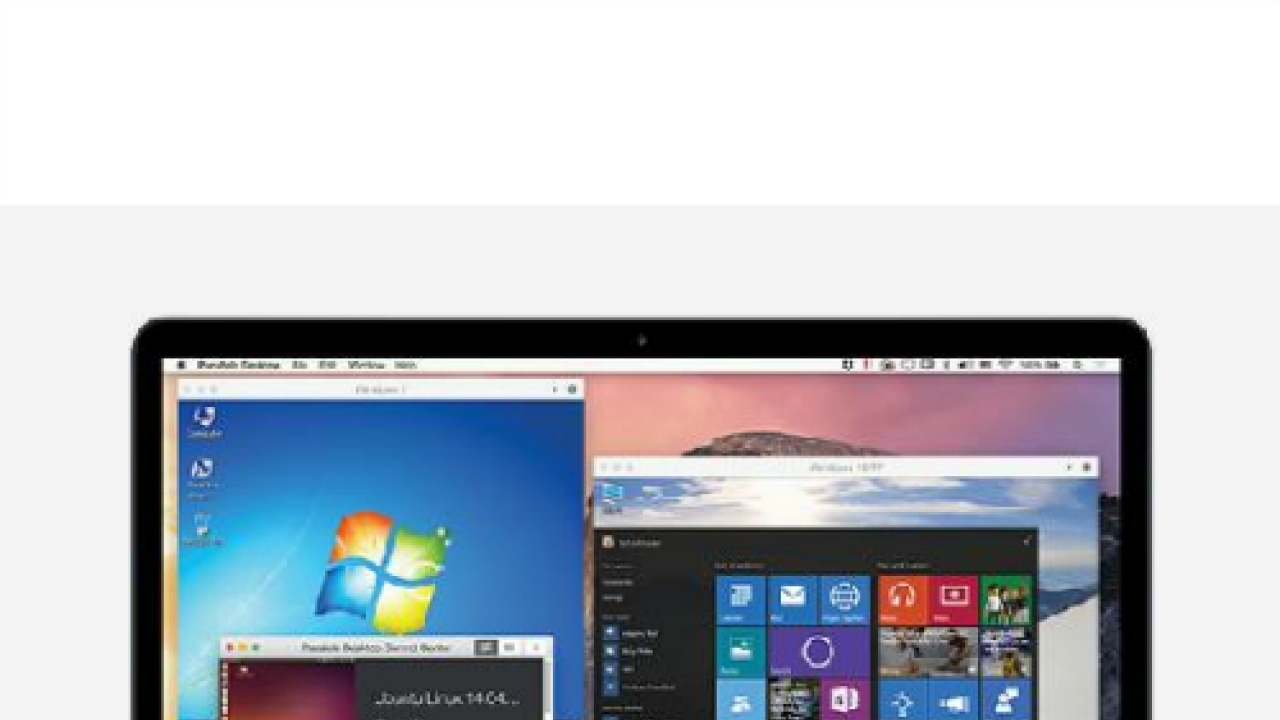
Works with OS X, Windows 10, 8.1, and 7, Google Chrome™,Linux and Unix, and macOS Server. No more having to choose between PC or Mac.
Touch Bar
Add Windows applications to Touch Bar™ for instant access and customization.
Connect Devices
USB, USB-C, Thunderbolt and FireWire devices connect with Windows. Pair your Bluetooth® devices—including Xbox One controller, stylus pen and printer—to work with both Windows and macOS.
Retina® Display Support
Smart resizing and independent screen resolutions for separate displays.
One-Click Tuning
Select productivity, games, design, software testing, or development, and Parallels Desktop will optimize your VM settings and performance for you.
Instant Access
Launch and access Windows applications right from the Mac Dock.
Save Disk Space
Get the most out of your Mac with automatic Disk Space optimization.
Office 365 Integration
Allows Word, Excel, or PowerPoint documents in Safari to open in their native Windows Office application.
Works with Boot Camp
Reuse your existing Boot Camp installation. Converting a virtual machine from Boot Camp is easy—just follow our installation assistant at startup.
Volume License Key
Unified volume license key, centralized license management, and advanced security features are available in Parallels Desktop for Mac Business Edition.
Travel Mode
Extend battery life while away from a power source.
Bonus! Parallels® Toolbox
Over 30 one-touch tools—clean your drive, take screenshots, download a video, and more, all with just a single click.
Bonus! Remote Access
Remote access to your Mac from any iOS device, Android device, or browser with Parallels Access®.
24/7 Support
Premium 24/7 phone, email, and social support after activation.
- Share Mac applications with Windows
- Automatic resolution change
- Single cloud storage space between Mac and Windows
- Drag and drop files between Mac and Windows
- Copy and paste files or text between Mac and Windows
- Launch Windows applications right from the Dock
- Move your PC to Mac in a few easy steps
- Assign any USB devices to your Mac or Windows
- Retina display support for Windows
- Volume control synchronization
- Open any site in Microsoft Explorer right from Safari® browser
- Apply macOS Parental Control to Windows applications
- Windows alerts in Mac Notification Center
- Mac dictation inside Windows applications
- See the number of unread emails in the Dock
- “Reveal in Windows Explorer” in macOS files menu
- Virtual machine encryption
- Linked clones for VMs*
- Vagrant provider*
- 32 vCPUs and 128 GB vRAM*
- Nested virtualization for Linux*
- Drag and drop files in macOS guests
- Real-time virtual disk optimization
- Create VM from VHD and VMDK disks*
- Drag and drop to create VM
- Disk Space Wizard optimizes your disk space
- Shared folders and printers for Linux VMs
- Windows applications in Launchpad
- Power Nap in Windows
- Use Force Touch to look up definitions
- New virtual machine wizard
- Mission Control support
- Presentation Wizard prevents most projector issues
- Drop files onto Outlook to create a new message
- Multi-language keyboard sync
- Picture-in-Picture view
- Share Bluetooth between Mac and Windows
- macOS guest support
- Spaces functionality for Windows applications
- Mission Control exposes your Windows applications
- DirectX support
- Thunderbolt support
- Licensing portal*
- Firewire support
- USB-C and USB 3.0 support
- Work without risk with Snapshots
- Safeguard your VM with encryption
- 2 GB video memory support
- Finder tabs work with Windows applications
- AVX512 instruction set support
- Mojave support
- Disk usage optimizations
- Report disk space left on Mac
- Express installation of Windows 10
- Native Mojave screenshots
- Auto allocation of video memory
- “Free Up Disk Space” wizard
- Free OS downloads
- Coherence for external displays
- Continuity camera support
- Touch Bar support
- Shared smart card reader
- Multi-monitor support
- 4K shared camera support
- CPU usage indicator
- Mojave Quick Look support
- Pressure sensitivity support
- Resource usage monitor
- OpenGL support
- Offer to import Boot Camp
- Auto-detect games keyboard
- And many more…
*Available with Parallels Desktop Pro Edition and Business Edition subscriptions
In Part 1 of the Parallels Mac Management for SCCM series I installed the Parallels Configuration Manager Console Extension. I installed this on my site server ‘ConfigMgr’.
Part 2 focused on the installation of the Parallels Proxy which I installed on a remote server called ‘Parallels’ which I intend to use to install the Parallels roles.
Part 3 of the series concluded the ‘role’ installation, namely the NetBoot Server and OS X Software Update Service.
Part 4 of the Parallels series focused on getting the Parallels Mac client onto a Mac OS X device.
In Part 5 of the series I will show you how to deploy an application down to a Mac OS X device, install it via the app portal and remove the application.
Set up the CMAppUtil tool
Before we can configure the application in ConfigMgr we need to convert the deployment onto a format that ConfigMgr can consume. To achieve this we need the CMAppUtil tool provided by Microsoft as part of the ConfigmgrMacClient.msi. This can be downloaded from here. Click the Download button.
Select the ConfigmgrMacClient.msi and click Next.
Parallels Desktop 13.3.1 Crack is greatest VM software. It truly works with Mac OS X tool with affordable specifications. It's a powerful software. Parallels Desktop 13 that enables the individuals to develop the digital tool conveniently. This software allows operating windows OS on Mac computer. Parallels desktop 9 crack for mac download. Parallels Desktop 14 Crack is a software that offers you to run Windows and Mac application side by side without rebooting your system. It is a front-runner global cross-platform solutions and producer of the No. 1-selling computer software for running Windows, applications for a Mac. Parallels Desktop 12 Crack 2016 Total version is a computer software created by Parallels company for mac clients to set up windows by themselves mac. Parallels Desktop Crack is the famous software among the Mac users all around the globe. Many Mac users want to use the Windows operating system on their Mac devices. Parallels Desktop 14 Keygen helps them to use Windows interface on their Mac device.
Once downloaded run the MSI on a Windows device to extract the contents of the file into a dmg file that can be used on a Mac device. Click Next.
Agree to the licence agreement and click Next.
Make a note of the location the files will extract to and click Next.
Continue through the wizard to completion. Browse to the location C:Program Files (x86)MicrosoftSystem Center Configuration Manager for Mac client if you have installed into the default location. Copy the macclient.dmg over to a Max OS X machine.
Once the dmg file is on the Mac, double-click the file to see its contents. Extract the Tools folder from the file by dragging and dropping it to a folder on your Mac.
The CMAppUtil is the utility we will use to convert a Mac package into a .cmmac file that ConfigMgr can use. CMAppUtil supports the .dmg, .pkg, .mpkg, .app file formats.
In this example, I have downloaded the WinZip 5 for Mac application and placed the .dmg file for the WinZip install into the same folder as the CMAppUtil file.
Converting to .cmmac
Load up Terminal on the Mac by launching Finder and navigating to Applications>Utilities.
To convert a dmg to the .cmmac format use the following command:
Mac Share Files
The -c option specifies the source file being converted. The -o option specifies the output path. The -s is not required but I used it to fix some issues extracting out the content of the .dmg and is worth including.
After the process has completed you will have a .cmmac file that can be consumed by ConfigMgr. Copy the .cmmac over your ConfigMgr source content share.
Creating the application
In the ConfigMgr console, go to the usual location where you would create an application, in the Software Library>Overview>Application Management>Applications node. Right click and choose Create Application.
In the Create Application Wizard choose the Automatically detect information about this application from installation files checkbox. From the Type drop down choose Mac OS X and then enter the network location for the .cmmac file. Click Next.
Click Next.
Enter the relevant information about the application and click Next.
Click Close to complete the wizard.
To specify the command that you want to use to install, and optionally uninstall, the application on a Mac, right click the Deployment Type and select Properties.
On the Programs tab enter a command to install and remove the application.
Use the following syntax:
As an example, the following command line contains the installation and uninstallation commands for Firefox (note the colon characters, which are required):
:/usr/bin/ditto “Firefox.app” “/Applications/Firefox.app”:rm -rf “/Applications/Firefox.app”:
The first section :/usr/bin/ditto “Firefox.app” “/Applications/Firefox.app”: installs the Firefox.app into the Applications/ folder.
The second section rm -rf “/Applications/Firefox.app”: removes Firefox from the Mac device.
Therefore, for my installation of WinZip, I have used the command
Distribute the content to a Distribution Point and then right click the newly created application and choose Deploy. Target the deployment at a Mac based collection, here I have chose the All Mac OS X Systems collection.
Since I am going to use the Parallels Application Portal, I will make the application available.
Installing and Removing via the Parallels Application Portal
Once policy has applied to the Mac OS X device, remember this can be forced by clicking Connect in the Parallels Mac client or you can wait the default of 60 minutes for updates to be checked automatically, then head over to the Parallels Application Portal.
The portal is located in the Applications folder in Finder.
The application will be available to you. Click Install.
Once installed, the application will be available to you in the location you installed it to.
To uninstall the application, click the Remove button in the portal.
Parallels Desktop 10 For Mac
If you receive any failures, or just want to have a nosy in the log files then the pma_agent.log file located in /Library/Logs is the one to check. The log snippet below, for example, showed a problem locating the content on the DP. A quick redistribution of the content to the DP fixed the problem.
Parallels For Mac
In Part 6 of the series, I take a look at deploying packages via Parallels. Packages can be used in Task Sequence deployment in the Parallels Mac Management product, whereas applications cannot, so it is worth looking both application models.