Parallels For Mac Windows Boot
Easily convert your existing Windows Boot Camp partition to a new Parallels Desktop virtual machine. Not just for Windows Run a wide array of operating systems including macOS, Windows 10, 8.1, and 7, Linux, Google Chrome, and more. C Net tested the performance of Windows XP running via Parallels and Boot Camp on a MacBook Pro 'Core Duo' 2.16 17-Inch with 2 GB of RAM. The reviewer setup a 10 GB partition for Windows XP with Boot Camp and a 20 GB virtual disk with Parallels. Windows 10 on Mac: Boot Camp vs Parallels Dec 2, 2015 If you want to run Windows 10 on a Mac there are really only two options worth considering: a native install using Boot Camp or virtualization through Parallels.
- Parallels For Windows Download
- Installing Parallels For Mac Windows 7
- Parallels 8 For Mac
- Parallels For Mac Windows Boot Camp
- Parallels For Mac Free
- Parallels For Mac Windows Bootstrap
Today's Best Tech Deals
Picked by PCWorld's Editors
Top Deals On Great Products
Picked by Techconnect's Editors
Parallels Desktop for Mac
Parallels Desktop for Mac could compel you to buy an Apple computer. This $80 software package enables you to run Microsoft Windows--and the apps it supports--as a virtual machine on any Intel-based Mac running Mac OS X 10.4.6 or higher. To get it to work you'll have to purchase a copy of Windows, but it's worth it.
Installing Parallels 1.0 was easy. A wizard and a downloadable PDF manual walk you through creating a new virtual machine. I ran across one problem during this process: The optical drive on a 2-GHz Intel Core Duo MacBook read one Windows XP Professional installation CD but not another, seemingly identical disc. A Parallels spokesperson says that the issue is rare, but that the company will refund your money for its software (not for Windows, however) if you have the same problem.
Running Windows via Parallels was smooth with 1GB of RAM. The OS appears within a fixed-width Finder window; clicking in it gives you access to Windows files, applications, and settings. You can toggle back to the Mac OS by pressing the <Control>-<Alt> key combination. I had no trouble using Windows apps such as Adobe Reader, Internet Explorer, and Ulead PhotoImpact.
I obtained mixed results with some hardware and shortcut keys. A USB thumb drive worked, but a Philips MP3 player didn't. Using shortcut keys within Internet Explorer worked, but <Control>-clicking to eject a CD didn't. (A recent beta update has since improved USB and keyboard support.) Parallels doesn't support 3D accelerated graphics, so don't expect to play many Windows games; the company plans to add that feature later.
The best part about Parallels is that you don't have to dual-boot Windows as you do with Apple's free Boot Camp utility. I switched often between the OSs--the ideal setup for a Mac-loving PC user.
Parallels Desktop for Mac
This easy-to-use software lets you run Windows and its apps smoothly on an Intel-based Mac.Price when reviewed: $80
Current prices (if available)
Parallels Desktop for Mac
Coupon Codes
Sometimes, Mac users need to run Windows software. Maybe there’s a program you need for work that doesn’t offer a Mac version, or maybe you occasionally need to test websites in Internet Explorer. Whatever you need Windows for, Parallels is the best tool for the job.

Why Use Parallels Instead of Boot Camp or VirtualBox?
RELATED:How to Install Windows on a Mac With Boot Camp
Sure, you could set up your Mac to run Windows with Boot Camp, but that means restarting your computer every time you need to use Windows. Parallels runs Windows within macOS, using what’s called a Virtual Machine. This allows you to quickly switch between the Mac and Windows desktops. You can even combine the two desktops, if you want, and run Windows software right on your Mac desktop from your Mac’s dock.
Virtual machines are complicated, but Parallels makes it reasonably simple to set one up and use it. There are other virtual machine options available to Mac users, including the open source VirtualBox, but Parallels is different in that it’s designed exclusively with Mac users in mind. Parallels costs more (since VirtualBox is free and Parallels is not), but there are hundreds of little design touches that help make running Windows within macOS as painless as possible, and that make setting everything up quick and easy. it’s well worth the cost.
How Much Does Parallels Cost?
Browsing the Parallels website, it can be a little tricky to find out what the product actually costs. So here’s a quick breakdown:
- Purchasing the latest home version of Parallels Desktop costs $80 as of this writing. This lets you run Parallels on a single Mac.
- Upgrading from one version of Parallels to another generally costs $50, and will probably be necessary every couple of years if you keep installing the latest versions of macOS.
- A $70 annual subscription gives you access to all updates “for free,” according to the Parallels website.
RELATED:How to Make Linux and macOS Virtual Machines for Free with Parallels Lite
If you just want to try out Parallels and see if it works for you, you can: there’s a 14 day trial of the software, which you can access without providing a credit card number. There’s also Parallels Desktop Lite, which is free on the Mac App Store and lets you create both Linux and macOS virtual machines. Parallels Desktop Lite can only run Windows virtual machines if you pay for a subscription, however.
One more note: purchasing Parallels does not give you a Windows license, or a Windows product key. If you have a Windows installation CD or USB key handy with a valid license you can use that, otherwise you will need to purchase Windows 10 from Microsoft to create a Windows 10 virtual machine.
RELATED:You Don’t Need a Product Key to Install and Use Windows 10
Parallels For Windows Download
We’ll point out that you don’t technically need a product key to install and use Windows 10—Microsoft basically gave up enforcing their license requirements with Windows 10, and you can download Windows 10 right from Microsoft at no cost (you’ll probably want it in the form of an ISO file). Legally speaking, however, you still need a product key to use Windows, even in a virtual machine.
How to Install Windows in Parallels
Got everything you need? Good. The new virtual machine wizard, which launches the first time you open Parallels, makes the process simple.
Assuming you already have a Windows CD or ISO, click the “Install Windows or another OS from a DVD or image file” button.
The ISO or DVD should be found automatically; otherwise, click the “Locate Manually” button. Then click “Continue.”
Get up and running in minutes and bring your files, applications, browser bookmarks, and more from your Windows system to your Mac. Any Winners List request must be received by B&H within one (1) year of the date the Sweepstakes is conducted. 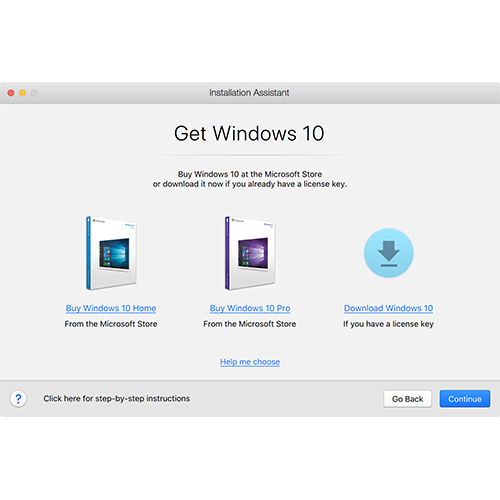 This downloadable version of Parallels Desktop 14 Standard Edition for Mac supports systems running Mac OS X El Capitan 10.11.6 or later and comes with a 1-year license. This fast, user-friendly, and powerful application is designed for running Windows on a Mac without needing to reboot.
You’ll be asked whether you want an Express installation, which automates the installation process so that you don’t need to enter the product key or click “Next” during the installation process.
Choose this option if you want, otherwise plan on babysitting the installation a little bit.
Next you’ll be asked what you plan on using this virtual machine for: work-related software or gaming.
If you select Games only, the virtual machine will be set to use a lot more resources, so only click that if you intend to do serious gaming in the virtual machine (which is probably not a great idea). Also make sure your Mac even has enough resources to dedicate—if you spread your computer’s resources too thin, your virtual machine will be very slow. You can change these settings later, but I recommend going with “Productivity” in almost all cases.
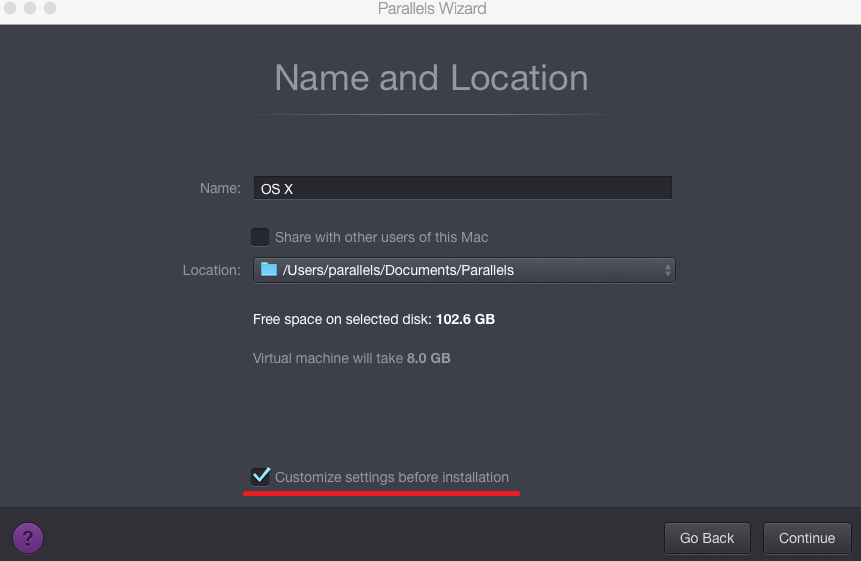
Finally, you’ll be asked for a few details: what the machine should be named, where it should be located, and whether you want a shortcut to the machine on your desktop.
You can also configure the settings before installation—don’t worry, you can tweak any of those later if you’d rather not dive in right now. Click “Continue.”
The Windows installer will run. If you selected the Express installation, you won’t need to do anything: just watch as Windows installs. If not, you’ll have to click “Next” a bunch of times and enter your product key, as is normal for installing Windows.
The installation process can take a while, if mechanical hard drives or a DVD is involved. If everything is running off an SSD, however, you’ll be up and running in a few minutes.
Eventually you’ll see the Windows desktop! We’re almost done.
How to Seamlessly Integrate Your Virtual Machine Into macOS
That’s all well and good, and you can start using Windows now—but if you really want to get the best of what Parallels has to offer, you have a few more steps ahead of you.
At the top-right of your virtual machine you’ll see a caution sign. This is letting you know that Parallels Tools needs to be installed. Installing this lets you move your mouse between macOS and Windows in one swift motion, and also makes it possible to access your Mac files from within Windows. To get started, click that caution sign, then click “Install Parallels Tools.”
Doing this will mount a virtual CD in the Windows virtual machine. You’ll be asked what you want to do by Windows; select “Install Parallels Tools.”
Installing Parallels For Mac Windows 7
The installer will take a few minutes, and eventually will require you to restart Windows. Do that and you’ll be up and running: your virtual machine will be integrated with macOS.
Once Parallels Tools is installed, Windows integrates very cleanly with macOS. There are all kinds of examples of this:
Parallels 8 For Mac
- Moving your mouse to your Windows virtual machine is seamless.
- Anything you copy to your Windows clipboard can be pasted in Mac apps, and vice-versa.
- The Documents, Downloads, and Desktop folders in Windows are symbolically linked to the same folders in macOS. Change a file in one place and it changes in the other.
- If you have Dropbox or iCloud running in macOS, those folders are available in Windows Explorer.
- If you have OneDrive set up in Windows, that is available to you in macOS.
- Individual Windows programs are shown in your Mac’s dock.
We could go on: the extent of the integrations is staggering. If any of them bother you for any reason, you can change them by shutting the virtual machine down, then clicking the Settings button for it.
Head to the “Sharing” tab to disable the folder sharing.
And head to the “Applications” tab to stop Windows applications from showing up in your Mac dock.
Parallels For Mac Windows Boot Camp
There are all kinds of other settings we could explore, but this article is only a starting point. Dive in and experiment.
Parallels For Mac Free
More Than Just Windows
Parallels isn’t just for running Windows, either: you can use it to set up Linux, ChromeOS, and even macOS virtual machines.
We outlined how to create Linux and macOS Virtual machines in Parallels Desktop Lite, and the process is identical for the full version of Parallels Desktop, so check out that article if you’re interested.
RELATED:How to Free Up Disk Space in Parallels
If you intend to create a lot of virtual machines, you should also read about freeing up disk space in Parallels, because these machines will eat up a lot of hard drive space.
Parallels For Mac Windows Bootstrap
READ NEXT- › What Should You Do If You Receive a Phishing Email?
- › Why Do You Have to Log In to Your Home PC, Anyway?
- › The Best New Features in Android 10, Available Now
- › How to Use the chown Command on Linux
- › What’s New in Windows 10’s 20H1 Update, Arriving Spring 2020