Similar Parallels Desktop For Mac
Parallels lets you run many different types of operating systems on your Mac. Because the developers knew that most Mac users will want to install at least a Windows OS, Parallels includes a Windows Express installation option that eliminates the need to babysit a Windows XP or Vista installation.
This guide will take you through the Windows Express installation, which creates a virtual machine on your Mac. We'll stop short of actually installing Windows, because the specific steps depend on whether you're installing Windows XP, Vista, Win 7, or Win 8.
Parallels Desktop is a software for Mac that enables to install Windows operating system and run Windows applications on a Mac (Intel based processors). Run thousands of Windows apps like Microsoft Office, Internet Explorer, Access, Quicken, QuickBooks, Visual Studio, even graphic intensive games and CAD programs without compromising on performance or rebooting. Parallels Desktop 14 is fully optimized for Windows 10 and macOS Mojave.
What You Will Need
- Parallels Desktop for Mac v3.0 or later.
- The installation CDs for Windows XP or Vista.
- 20 GB free disk space. You can get by with less (I've performed an installation with as little as 8 GB of available disk space), but you'll appreciate the extra room if you later want to install more Windows applications or store larger Windows files than you originally intended.
- About an hour of free time, for the Windows Express setup and to actually install Windows.
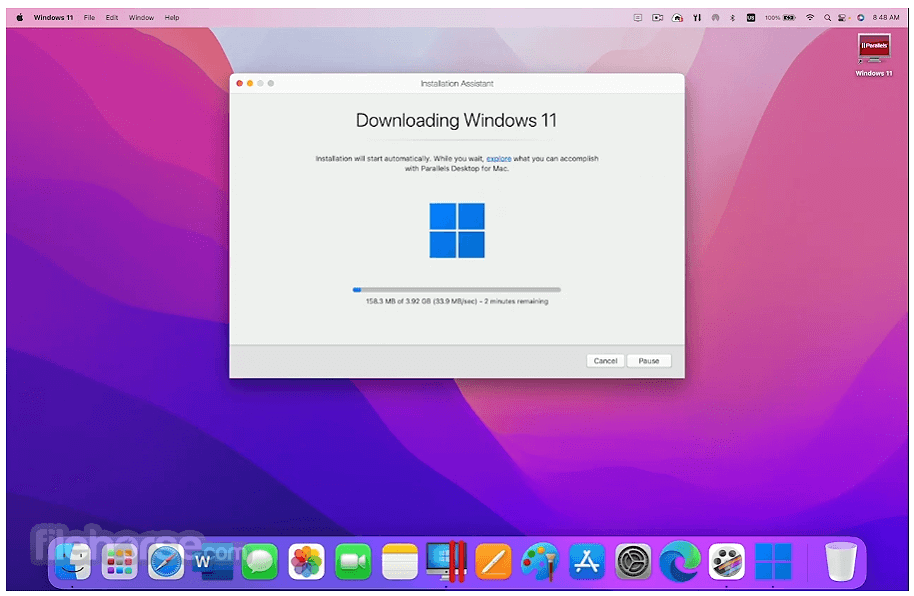
The Parallels OS Installation Assistant
By default, Parallels uses the Windows Express installation option. This option creates a virtual machine with settings that will work just fine for most individuals. You can always customize the virtual machine parameters later if you need to.
The real advantage of Windows Express is that it's fast and easy; it does most of the work for you. It will collect most of the information that Windows needs by asking you some questions. Once you supply the answers, you can leave and then return to a fully installed version of Windows. This is a much more pleasant Windows installation than the standard. The downside is that the Windows Express method doesn't let you directly configure many settings, including type of network, memory, disk space, and other parameters, although you can always tweak these and other settings later.
Using the OS Installation Assistant
- Launch Parallels, usually located at /Applications/Parallels.
- Click the ‘New’ button in the Select a Virtual Machine window.
- Select the installation mode that you want Parallels to use.
- Windows Express (recommended)
- Typical
- Custom
- For this installation, select the Windows Express option and click the ‘Next’ button.
Configuring a Virtual Machine for Windows
Parallels needs to know which operating system you plan to install, so it can set the virtual machine parameters and collect the information necessary to automate the installation process.
Configure the Virtual Machine for Windows
- Select the OS type by clicking the dropdown menu and choosing Windows from the list.
- Select the OS version by clicking the dropdown menu and choosing Windows XP or Vista from the list.
- Click the ‘Next’ button.
Entering Your Windows Product Key and Other Configuration Information
The Parallels Windows Express installation option is ready to collect some of the information it needs to automate the installation process.
Product Key, Name, and Organization
- Enter your Windows product key, which is usually located on the back of the Windows CD case or inside the Windows envelope. The dashes in the product key are entered automatically, so just enter the alphanumeric characters. Be careful not to lose the product key, because you may need it in the future if you need to reinstall Windows.
- Enter your name by using the alphanumeric keys and the space key. Do not use any special characters, including apostrophes.
- Enter your organization's name, if appropriate. This field is optional.
- Click the ‘Next’ button.
Name That Virtual Machine
It's time to specify a name for the virtual machine that Parallels is about to create. You can choose any name you like, but a descriptive name is usually best, particularly if you have multiple hard drives or partitions.
In addition to naming the virtual machine, you will also choose whether your Mac and the new Windows virtual machine should be able to share files.
Pick a Name and Make a Decision About Sharing Files
- Enter a name for Parallels to use for this virtual machine.
- Enable file sharing, if desired, by placing a check mark next to the 'Enable file sharing' option. This will let you share files in your Mac's home folder with your Windows virtual machine.
- Enable user profile sharing, if desired, by placing a check mark next to the ‘Enable user profile sharing’ option. Enabling this option allows the Windows virtual machine to access the files on your Mac desktop and in your Mac user folder. It's best to leave this file unchecked and manually create shared folders later on. This provides more protection for your files and lets you make file sharing decisions on a folder-by-folder basis.
- Click the ‘Next’ button.
Performance: Should Windows or OS X Get Top Billing?
At this point in the configuration process, you can decide whether to optimize the virtual machine you're about to create for speed and performance or allow applications to have dibs on your Mac's processor.
Decide How to Optimize Performance
- Select an optimization method.
- Virtual Machine. Choose this option for the best performance of the Windows virtual machine you're about to create.
- Mac OS X applications. Choose this option if you prefer your Mac applications to take precedence over Windows.
- Make your selection. I prefer the first option, to give the virtual machine the best performance possible, but the choice is yours. You can change your mind later if you decide that you made the wrong choice.
- Click the ‘Next’ button.
Start the Windows Installation
All of the options for the virtual machine have been configured, and you've supplied your Windows product key and your name, so you're ready to install Windows. I'll tell you how to start the Windows installation process below, and cover the rest of the process in another step-by-step guide.
Begin the Windows Installation
- Insert the Windows Install CD into your Mac's optical drive.
- Click the ‘Finish’ button.
Parallels will start the installation process by opening the new virtual machine you created, and booting it from the Windows Install CD. Follow the onscreen instructions to install Windows.
Introduction
When you're installing Windows on your Mac, you need to choose how you would like your Windows programs to work - like a Mac or like a PC:
In this article, we're going to explain the difference between these two options. But first of all, keep in mind that no matter which option you choose in Parallels Wizard, you can easily change these settings after Windows has been installed on your Mac.
Parallels for mac windows 10 freezing.
Like a Mac

If you're used to working with Mac OS X, we recommend that you choose Like a Mac. In this case, the Coherence view mode becomes the default one. This view mode makes running Windows programs appear on the screen exactly like Mac OS X applications while the Windows desktop becomes invisible:
Moreover, if you choose Like a Mac, the Desktop, Documents, Pictures, Music, Movies, and Downloads folders of your Mac are shared with those in Windows. What does it mean? If you save a file, say, in the Documents folder in Windows,
it is saved in the Documents folder in Mac OS X:
And the same with other folders. For example, if you save a picture in the Pictures folder in Windows, it is saved in the Pictures folder in Mac OS X. This is done so that you didn't have to browse through the Windows folders every time you need to open these files again.
If you choose Like a Mac, the Windows Recycle Bin is also merged with the Mac OS X Trash. From that point on, when you delete a file from the above mentioned folders in Windows, they are placed not in Windows Recycle Bin, but in Mac OS X Trash. So you don't have to clean both the Recycle Bin in Windows and the Trash in Mac OS X - just empty the Mac OS X Trash and forget about the Windows Recycle Bin.
Like a PC
If you prefer to make Windows less integrated with Mac, we recommend that you choose Like a PC. In this case, no Mac OS X folders are shared with Windows and the Window view mode becomes the default one. In this default view mode, you work with Windows and Windows programs in a separate window:
Parallels Desktop For Mac Free Trial
How to change integration settings after Windows is already installed?
Technically both 'Like a Mac' and 'Like a PC' modes are a combination of integration features provided by Parallels Desktop.
The following features are enabled when 'Like a Mac' mode is used:
- Coherence
- Shared Folders and Shared Profile
- Shared Applications
- Shared Clipboard
To instantly switch between 'Like a Mac' and 'Like a PC' modes you can just switch between the 'Window' and 'Coherence' view modes.
- If you run your Virtual machine in Coherence mode ('Like a Mac') you need to left-click on Parallels icon on top of Mac screen and choose 'Exit Coherence' from the list
If you run your Virtual machine in Window mode ('Like a PC') you need to click on icon on the top right corner of the Virtual machine's window, or click on View menu and choose 'Enter Coherence'
Additionally you can change the level of integration between the Mac and your Virtual machine:
- in Window mode: Virtual Machine menu ► Configure ► Options
in Coherence mode: click on then press ALT key and choose Configure from the list, then go to Options tab (when you are in Coherence mode)
Then go though Sharing, Applications, Coherence and Advanced options to make necessary changes and adjust your preferred level of integration.
To learn more about how to change various integration settings after Windows is already installed on your Mac, please refer to Parallels Desktop User's Guide available online or from the Help menu. Using this guide, you can learn how to:
- Change the default view mode;
- Share Mac OS X disks and folders with Windows and vice versa;
- Completely isolate Windows from Mac;
- Open Mac OS X files with Windows programs and Windows files with Mac OS X applications;
- and much more
Parallels Desktop For Mac Free
Related articles: