Windows 7 Download For Mac Parallels
- Windows 7 Download For Mac Parallels Vs Boot
- Windows 7 For Mac Free
- Parallels For Windows
- Games Download For Mac
- Windows 7 Download For Free
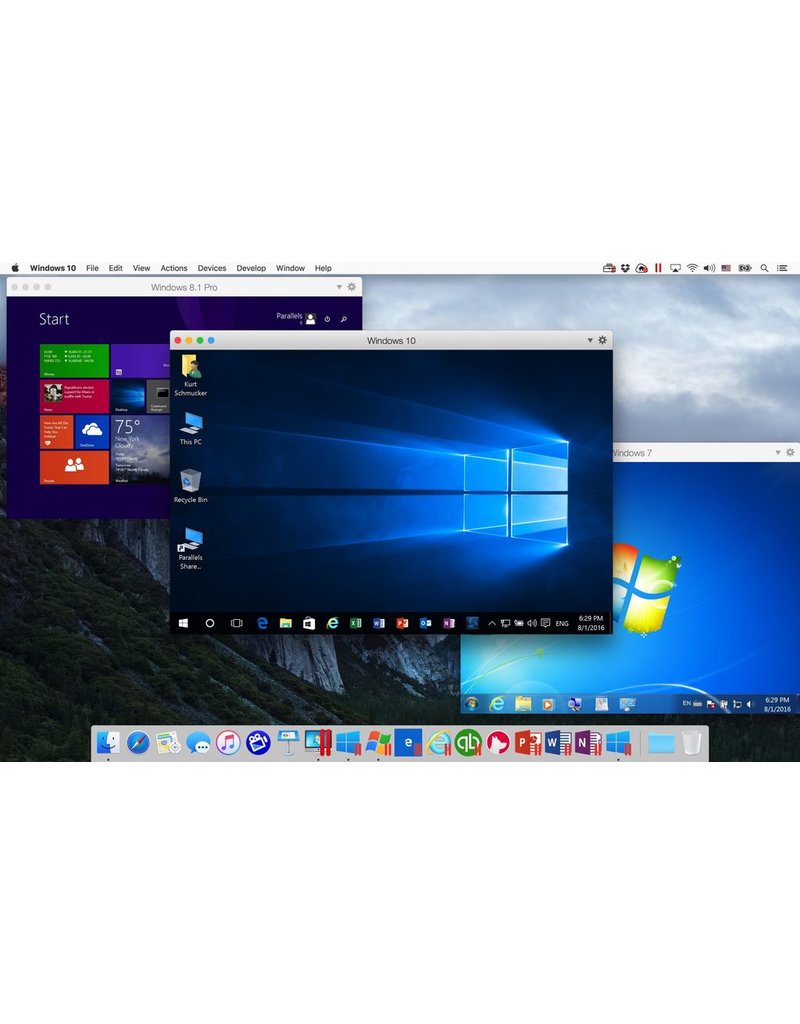
Parallels Desktop for Mac is the first solution that gives Apple users the ability to run Windows, Linux or any other operating system and their critical applications at the same time as Mac OS X.
I read through your splendid tutorial on installing Windows XP with Apple’s Boot Camp product (see boot camp help) but that’s not for me. I don’t want to have to reboot each time I want to try something out with a Windows app on my Mac. I’ve read about something called the Parallels Desktop and am hoping you can explain how to install it and how to use it so I can run Windows in parallel with Mac OS X? Thanks.
I have to admit, I’ve been using Macs since the digital stone age and still get frustrated that I have to buy PCs so I can run Windows with any decent results. I’ve run Microsoft’s Virtual PC, for example, but it’s a dog and even when you have lots of patience it’s pretty difficult to work within that environment even if you have the most powerful computer and least demanding application.
Further, I think that Apple’s Boot Camp program is incredibly smart and have been dual booting Macs for quite a while, though usually into different flavors of Linux or related. I even had my tri-booting Mac laptop make it to the cover of a Linux magazine!
Still, though, the idea of running Windows — or another OS — within Mac OS X through what’s called a “virtual machine” or “virtualization” solution, is too good to miss. That’s why I was thrilled when Parallels released its Parallels Desktop, a full Windows-capable virtualization package for less than $80. Nice!
Just like with Apple’s Boot Camp, there are some specific requirements that you need to meet before you can use Parallels Desktop, however, chief among them the requirement that you have an Intel-based Macintosh. You’ll also want at least a few gig of free disk space and at least 1GB of memory for performance reasons. They also recommend you have the very latest version of Mac OS X, which is easily done with the Software Update capability on the Macs.
Let’s Get Started!
Your first step isn’t to download the application, believe it or not, but rather to decide whether you want to get a free 15-day product key or go ahead and buy the program and get a full product key. I suggest the latter, honestly, because it’s very cool and well worth the money. Now, download Parallels Desktop.
Once you get the 23MB disk image, open it up and you’ll see a pretty typical set of icons:
- The minimum amount of ram for Windows 7 is 1gb for 32 bit OS and 2GB for 64 bit. As far as Parallels 5.0, Win 7 is compatible but not going to happen. I would suggest an upgrade in RAM and buying snow leopard if you don't have it.
- The 14.0.1 version of Parallels Desktop for Mac is available as a free download on our software library. You can run this program on Mac OS X 10.7.0 or later. You can run this program on Mac OS X 10.7.
- Parallels requires a Mac computer with an Intel Core 2 Duo, Core i3, Core i5, Core i7, or Xeon processor, at least 2 GB of RAM (4 GB recommended to run Windows 7), and around 15 GB of available.
- Parallels Desktop 13 Download also includes the ongoing company’s Parallels Toolbox utility for both Mac and Windows. The toolbox contains a suite of useful tools that are one-off apps supposed to help users accomplish tasks throughout the day.
Don’t just click on the installer, however. Spend a few minutes reading through the User Guide included to double-check that everything’s compatible with your configuration. Then you’ll find that the installer is quite typical of Mac installers, with a license to accept, a hard disk to select for the installation target, and a few buttons to click. It’s so typical I’m not going to even include a screenshot here!
Once the installation is finished, it’s time to start the application, which you’ll find in a folder called “Parallels” in your Application directory. Click on the program and you’ll see a rather intimidating first screen:

Don’t panic. Instead, click on the “New VM…” button on the bottom left to launch the New VM Wizard. (VM = virtual machine, remember).
In the Parallels Desktop menu bar, click on the View menu > select Use Windows 7 Look if you opted not to use 'like Windows 7' when installing Windows 8 or 8.1, or if you upgraded to Parallels Desktop 9 or 10 for Mac. Parallels Desktop for Mac is simply the world's bestselling, top-rated, and most trusted solution for running Windows applications on your Mac. With Parallels Desktop for Mac, you can seamlessly run both Windows and macOS applications side-by-side without rebooting.
This will help you through the steps necessary to create a new “virtual” computer that will let you install the operating system of your choice, Microsoft Windows XP.
Your first decision will be to determine if you want to create a typical VM, create a custom VM, or create a blank VM:
As the wizard recommends, I also encourage you to choose the default configuration. It’s easy to tweak things afterwards, after all.
Since we’re doing a default configuration, we need to specify the OS type and version:
Poke around here a bit, you’ll be astonished at the number of different operating systems the Parallels Desktop supports!! Oh, and not to state anything too obvious, but remember that these are just default preferences. You still need the OS itself for installation.
Almost done with the Wizard.
You need to specify the name of your virtual machine, and where it should be stored on your disk:
Since this is your first VM, Parallels will need to create some directories too, as you’ll quickly learn:
No worries. Click “OK” and the virtual machine for Windows XP will be created and ready to install.
Ready to Install
Ah, well, we’re almost ready to install, as you can now see when you quit the Wizard and get back to the main Parallels Desktop view:
What’s wrong? Too little memory (RAM) allocated for my tastes. Easily fixed, by clicking on the word “Memory”, which takes you to the darn useful Configuration Editor:
Slide the control along to the recommended amount (or more, your call), and we’re finally ready to roll!
Installing Windows XP, Really
The first step to actually installing an OS is to insert the Windows install CD (DVD, actually) into your computer, then push the “play” button (rightward-facing triangle) in Parallels to start up the program with the new VM system. The system will prompt for a Parallels Desktop license code (which you did remember to request, right?). Enter that, and after a minute or two, your screen will look like this as you’re welcomed to the Windows XP Setup program:
This should already seem pretty cool if you’re a Mac person, because this is running within Mac OS X, yeah!
Now you can step through the standard steps of a Windows XP install in fairly short order:
You can work with the one unpartitioned space as-is, and when you get to the next screen I recommend you choose NTFS rather than FAT so that you have a higher performance Windows virtual machine. Note, however, that FAT is the file system that Mac OS X can more easily navigate if you want to actually access files within the Parallels virtual partition.
Continuing along…
Somehow, “exciting new look” probably isn’t intended to refer to the fact that we’re installing Windows XP within the Mac OS X environment, but it’s amusing nonetheless, isn’t it?
At this point you’ll go through some rudimentary Windows XP configuration questions, about language, region, and related. Finally, you’ll hit the second of the legal interludes in this process:
If you don’t have a valid product key for Windows XP (or whatever OS you’re installing) you’ll be stuck here, though you can try running for the 30 days allowed before you have to register your OS product.
A few more simple configuration options about timezone, current date and time, and you’re finally into the installation phase of Windows XP, which can take anywhere from 30 minutes to a few hours. I don’t have the patience to time it, so I’m not sure. Instead, it’s a great time for a chai break at Starbucks 🙂
When I come back, Windows is mostly installed and it’s just a matter of specifying a few more configuration changes. One thing that happens is that the virtual machine reboots itself and then automatically adjusts the screen resolution to escape the 640×480 hell that we were confined to for the initial installation process. Now we get a glorious Windows logo and boot screen within Parallels Desktop itself:
Now you need to do just a wee bit more Windows configuration, including what I consider a critical step:
You always want to select “automatic update” unless you’re a complete Windows guru and know exactly what you’re doing.
Next you’ll need to indicate if you want to register your version of Windows XP with Microsoft. If you’re going to use this for a long period of time, you might as well do that. Otherwise, select “no” and you’ll be reminded later when you’re perhaps ready to do so.
That’s basically all there is to it. We’re done. In just a few seconds Windows XP reboots and you end up with the familiar background screen, task bar, START button, and much more. All within the world of Mac OS X. Sweet indeed:
It’s not quite as snappy as Apple’s Boot Camp, as I’d expect, but it’s certainly a big improvement over the old sluggish world of Virtual PC.
That should get you going with Parallels Desktop. Questions? You might want to check out the Parallels Blog or pop into the Parallels Forum where users and developers compare notes.
Hope you’re up and running. I know that I’m delighted to have Parallels Desktop on my computer, finally.
Oh, and once you do have it running, don’t forget to also install Parallels Tools, a must-include package of utilities. Learn how here: Install Parallels Tools on Intel Mac.
Let’s Stay In Touch!
I have an older Mac OS X version 10.5.8 with 2.1 GHz PowerPC G5 and 1.5 GB DDR2 SDRAM memory. I want to run Windows 7 on it. I don't think I have Snow Leopard and I don't have Boot Camp.1) Can Boot Camp be installed?2) Then do I have enough RAM to install Windows 7 using Parallels 5.0 for Mac? I'm not very computer savvy with Apples.
Jerry
Windows 7 Download For Mac Parallels Vs Boot
Windows 7 For Mac Free
2 Answers
You'll need an intel Mac to run windows 7 through boot camp or parallels. Virtual PC runs on PowerPC and may run win 7, but I think it would be horribly slow.
Parallels Desktop 14.0.1 - Run Windows apps without rebooting. Download the latest versions of the best Mac apps at safe and trusted MacUpdate Download, install, or update Parallels Desktop for Mac from MacUpdate. Parallels Toolbox for Mac and Windows. 30+ tools in a lightweight, powerful, all-in-one application for Mac ® and PC. Easy to use and economical—a whole suite of tools for a fraction of the cost of individual apps, packaged in one simple interface. Parallels Desktop 14 ® for Mac makes it easier than ever to get back space on your Mac! Get up to 20 GB back with new disk usage optimization. Get up to 20 GB back with new disk usage optimization. Automatically reorganize your virtual disk to increase limits for optimal storage savings. To check for updates, click on the Parallels Desktop menu on Mac menu bar and select Check for Updates: If an update for your Parallels Desktop version is available, you will see the option to download and install it. 
In order to tell what type of OS X you have installed you can click the apple in the top left and select about this mac.
- 10.6 = snow leopard
- 10.5 = leopard
- 10.4 = jaguar.etc
Parallels For Windows
I know that as far back as jaguar (10.4) offered the ability to do bootcamp but at the time it was a beta feature.
Games Download For Mac
The main issue is your lack of ram. If you used boot camp, you may be ok. That would be your best bet. The minimum amount of ram for Windows 7 is 1gb for 32 bit OS and 2GB for 64 bit.
As far as Parallels 5.0, Win 7 is compatible but not going to happen. I would suggest an upgrade in RAM and buying snow leopard if you don't have it.
Parallels Desktop 14 Crack full is and easy to install application that offers you the possibility to run different operating systems on your Mac. Moreover, Parallels Desktop comes with its own installer which makes the entire process very straightforward. Parallels for mac free download. Parallels Desktop Torrent is a strong competitor of virtual machine ware and workstation users. As well as, it is an easy way to use your software and applications on the Mac devices. Furthermore, this software was made to work with various versions of Windows.